

All Invitation Card Maker App
Fast Video Downloader & Story Saver - DevBay
I used All Invitation Card Maker as a practical way to prepare event invitations without opening a full design program, and its appeal became clearest in a household setting. One person can handle the wording, another can choose the visual style, and the finished card can then be shared with guests. It is aimed at events rather than general graphic design, so the experience feels more focused than starting with a blank canvas.
The app is free to install and is listed for Everyone, which makes it approachable for a mixed-age household. It comes from Fast Video Downloader & Story Saver - DevBay and sits in the Events category. Its central job is simple: help you create an invitation for a wedding, birthday, party, or similar occasion, then prepare it for sharing. I found that focus useful because it keeps the task centered on the information guests actually need instead of turning a small invitation into a long design project.
How it works when several people share the planning
A realistic example is a family preparing a birthday party together. One adult may know the date, location, and guest details, while a child or teenager may have stronger opinions about colors and style. With this app, the planning can be divided naturally: one person supplies the practical information, and another helps make the card feel appropriate for the occasion.
That shared-device workflow is more useful than it first sounds. A phone can be passed around while the family compares the invitation on screen. Instead of sending unfinished files between separate design tools, everyone can review the same draft during the conversation. I would still keep one person responsible for the final wording, because several people editing event details casually can create confusion about times, addresses, or names.
The app is especially convenient when the invitation needs to be made quickly. If a party is being organized after work or between household errands, a focused invitation maker is less intimidating than a general-purpose editor. You do not need to begin by deciding the entire visual identity of an event. The task is narrower: create something readable, attractive, and ready to send.
Related News

Instagram Is No Longer a Photo App. It Is an Attention Engine

Microsoft Teams Mobile: When Collaboration Becomes Navigation

How the NFL App Adapts to Android and iOS Updates

Temu: Elevate Your Shopping Experience to Billionaire Status

Why Traffic Rider Works Best as a Precision Reflex Game

How Google’s Find Hub Transforms Everyday Searches
My strongest practical tip is to settle the facts before spending time on decoration. Write down the event name, date, time, place, and any important instruction first. Then use the design stage to improve presentation. This order prevents a common mistake with invitation tools: making a beautiful card and only later discovering that a key detail is missing or difficult to fit.
Keeping the invitation readable on a phone
Many guests will probably see the finished card on a small screen, even if it was designed on a larger one. I therefore paid attention to whether the invitation could be understood quickly rather than only admired at full size. Short lines, clear event details, and a strong distinction between the occasion and supporting text matter more than filling every available area.
A useful household routine is to ask someone who was not involved in creating the card to look at it for a few seconds. If that person cannot immediately identify what the event is and when it happens, the design needs simplification. This is a better test than asking the person who created it, because the creator already knows what the invitation is supposed to say.
Gallery
Another small but important habit is to check names and numbers separately from the visual design. Decorative work can draw attention away from spelling errors or an incorrect time. I would make a final reading pass before sharing, ideally with the person who knows the event logistics best.
Setup, boundaries, and the practical handoff
Getting started is straightforward in concept because the app has one clear purpose. You are not installing a broad office suite and then searching through unrelated tools. The current version is 2.6, and it supports devices running Android 7.0 or later. That gives it a useful reach for households that keep an older phone available for occasional tasks.
The app does not replace household planning. It helps present the plan. That distinction is important. It will not, by itself, decide who is invited, settle a disagreement about the venue, or ensure that every guest receives the final card. I see it as the last creative step after the family has already agreed on the event details.
Because the app is used for invitations, I would avoid treating the design screen as a private family record. Do not place sensitive information in the card simply because there is room for it. An invitation generally needs enough information to help guests attend, not a complete explanation of household arrangements. Keeping the content limited also makes the card easier to read.
There is another boundary worth setting on a shared device: decide who has permission to make the final version. This is not a claim about a special account system or family-control feature; it is simply good household practice. If several people use the same phone, agree that one person will approve the wording and share the finished result. That avoids accidental changes and makes responsibility clear.
The free entry point is helpful for trying the workflow, but the app also includes in-app purchases ranging from $0.99 to $34.99 per item. I would discuss that before handing the phone to a child or letting someone explore every design option. The presence of optional purchases does not make the app unsuitable for families, but it does mean that the person using it should understand which actions may lead beyond the free experience.
What the app is best at, and where another tool wins
Compared with making an invitation in a blank document editor, this app offers a more event-focused starting point. A document editor is excellent when you need precise text control, a formal letter, or a printable page with unusual structure. For a birthday or party card that needs to look finished quickly, I prefer a dedicated invitation workflow.
Compared with a full graphic-design app, the trade-off is different. A professional design tool gives you deeper control over layers, typography, image placement, and brand consistency. That is useful for a business event or a carefully art-directed wedding suite. It can also be more work than a household needs. All Invitation Card Maker makes more sense when speed and accessibility matter more than complete creative control.
It is also different from simply sending a text message. A message is faster for a small group and may be all you need for an informal change of plans. A designed invitation feels more deliberate and can make a milestone event feel special. The sensible choice depends on the occasion: use the app when presentation adds value, not merely because every announcement must become a card.
One non-obvious trade-off is consistency. A focused invitation app can help a family produce a coherent card quickly, but a general editor may be better if you need the invitation to match an existing poster, menu, or printed decoration. If the event already has a visual theme that must be reproduced exactly, I would test the available design flexibility before committing to the app.
Coordination from draft to guest list
The app becomes more useful when paired with a simple coordination method outside the design itself. Before creating the card, I would keep the guest list and event facts in one agreed place, then use the app for the outward-facing invitation. This prevents the design file from becoming the only record of who has been contacted.
For a household event, I would divide the work into three passes. The first pass confirms the facts. The second chooses the appearance and checks readability. The third prepares the final sharing step and records who has received it. This workflow is deliberately simple, but it reduces the chance that a family member assumes someone else handled an important guest.
It is worth making a distinction between designing and distributing. The app is built around making the card, while coordination may still happen through whatever communication method the household already uses. If you need attendance tracking, reminders, replies, or a shared calendar, a dedicated event-planning service may be a better companion. I would not expect the invitation itself to manage the entire event.
A practical tip for group decisions is to show two or three finished directions rather than asking everyone to comment on every tiny adjustment. Too many small choices can slow down a simple party plan. Let the person organizing the event choose the final option after hearing opinions. This keeps the creative part enjoyable without allowing it to take over the logistics.
For weddings or larger celebrations, I would be more careful. A card maker can handle the presentation layer, but larger events often need separate attention to meal preferences, directions, schedule changes, and response management. In that situation, the app can still be useful for the invitation image, while another system handles the operational details.
Sharing responsibly in a household
Before sending an invitation widely, I would check how it looks after being shared through the household’s usual messaging route. Text can wrap differently, images can be viewed at different sizes, and a card that looked fine in the editor may be harder to read in a conversation thread. A quick test with one trusted recipient is worthwhile.
I would also avoid assuming that every guest wants the same format. Some people may prefer a visual invitation, while others need the essential details written plainly in the accompanying message. Adding a short text summary can make the invitation more accessible and gives guests something searchable later.
That is one of the app’s limitations in everyday use: a finished design is not automatically a complete communication plan. The card may look polished, but guests still need clear context. I see the best result as a combination of the visual invitation and a concise message that explains why it is being sent.
Age, trust, and sensible use
The Everyone content rating makes the app suitable for a broad audience in terms of listed age context, but that should not be confused with unrestricted household use. A younger user may be perfectly capable of choosing colors and arranging a simple birthday card while still needing an adult to check personal details and purchase decisions.
I would let a child contribute to the creative choices when the event belongs to them. That gives the invitation a personal touch and turns the task into a useful shared activity. I would keep an adult in charge of addresses, phone numbers, venue details, and the final sending step. This is less about the app being difficult and more about protecting accuracy and privacy.
Trust also matters when an invitation includes information about a home or private gathering. Only include what guests need, and think carefully before forwarding the finished card beyond the intended group. A child may see sharing as the end of the task, while an adult should consider whether the image contains details that should remain limited to invited people.
The purchase range is another reason to establish clear boundaries before shared use. If the household is comfortable staying with free options, say so plainly. If a paid design element is acceptable, decide who approves it. This avoids the awkward situation where a child explores the app and a parent discovers a charge later.
For teenagers, the app can be a good middle ground between a plain text announcement and an overly complex design suite. They can take ownership of the look while an adult checks the practical information. For younger children, I would use it as a supervised creative activity rather than an independent communication tool.
Who should choose something else
I would skip this app if your main need is detailed event management rather than invitation design. Someone organizing a conference, a large formal ceremony, or a gathering with complex replies may need specialized planning features. In those cases, a card maker can support the visual announcement but should not be the central system.
I would also choose a general design application if you already have strict requirements for custom fonts, exact branding, layered artwork, or a coordinated collection of printed materials. The focused nature that makes this app approachable can become restrictive when the design brief is unusually specific.
On the other hand, I would recommend trying it when the household wants a presentable invitation without a long learning curve. It is a particularly sensible fit for birthdays, casual parties, family celebrations, and quick announcements where the visual card matters but professional design control does not.
My household verdict after using it
All Invitation Card Maker works best as a shared creative tool with clear human boundaries around it. One person can organize the facts, another can help shape the look, and an adult can approve the final details before the card goes out. That makes it more useful than its short description suggests, especially for families who want to collaborate without turning invitation planning into a technical project.
The app has attracted over 1 million installs and holds a 4.2 average from around 1.7 thousand ratings, which fits my impression of a focused utility that many people can pick up quickly. I would not treat those figures as a substitute for testing it on your own device, but they do suggest that the basic invitation-making idea has found a substantial audience.
My recommendation is qualified but positive. Start with a small event, prepare the wording before designing, and agree on purchase and sharing boundaries if the phone is used by several people. Check the final card on a normal phone screen, add plain-text details when needed, and keep a separate record of guests and replies.
For a household that wants a fast, friendly way to make birthday or party invitations, this app is worth trying. It is less convincing as a complete event-management solution or as a replacement for a powerful design studio. Used for what it does best—turning agreed event details into a shareable card—it offers a practical balance of speed, participation, and visual polish.
FAQs for All Invitation Card Maker App
What features does the All Invitation Card Maker App offer?
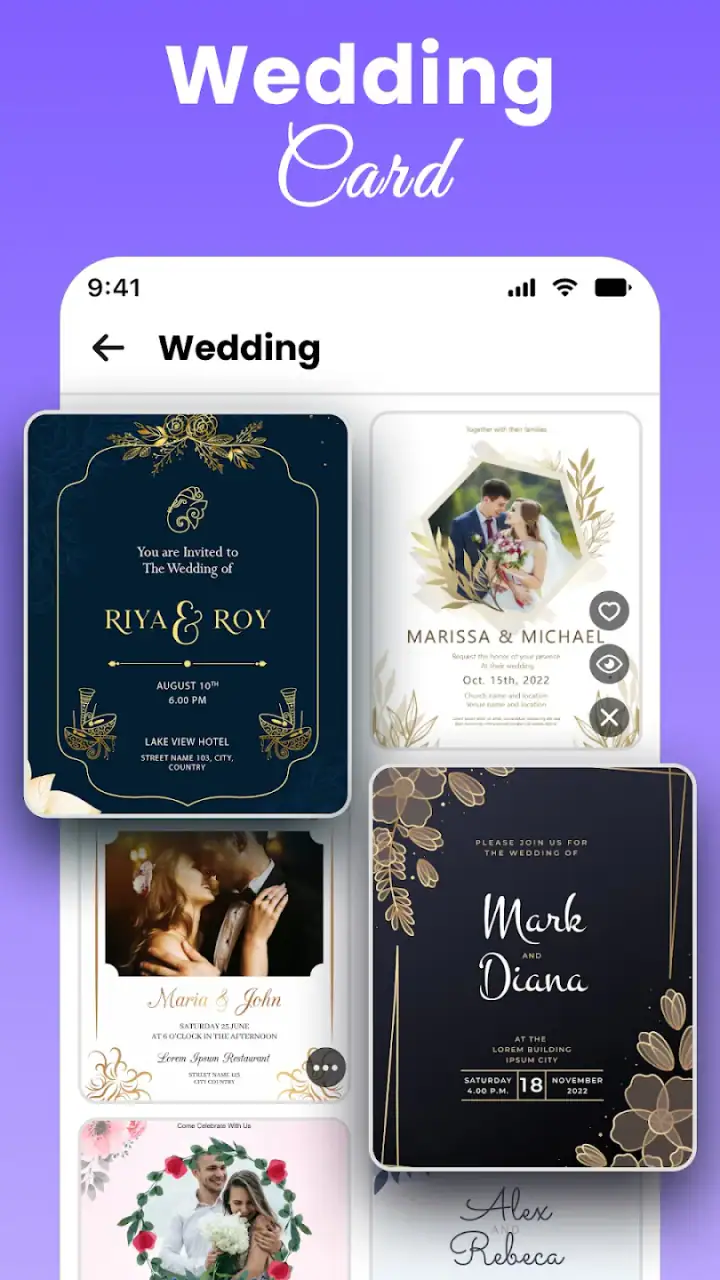
The All Invitation Card Maker App provides a wide selection of templates for various occasions, such as weddings, birthdays, and corporate events. It features customization options like adding text, images, and stickers. Users can also adjust font styles, colors, and layouts to create personalized invitations that suit their needs.
Is the All Invitation Card Maker App user-friendly for beginners?
Yes, the app is designed with an intuitive interface that is easy to navigate, making it accessible for beginners. It includes step-by-step guides and tutorials to help users create their invitations with ease. Even those with no design experience can produce professional-looking invitations quickly.
Can I share the invitations directly from the app?
Absolutely! The app allows you to share your creations directly via social media platforms, email, or messaging apps. You can also save the invitation to your device as a high-resolution image or PDF, ensuring easy distribution to your guests.
Does the app offer any in-app purchases or subscriptions?
The All Invitation Card Maker App may offer in-app purchases or subscription options to unlock premium features, such as additional templates or advanced editing tools. While the basic features are free, these options provide enhanced customization for users seeking more design flexibility.
Is the All Invitation Card Maker App available on both Android and iOS?
Yes, the app is available for download on both Android and iOS platforms. Users can find it on the Google Play Store and Apple App Store. Ensure your device meets the app's system requirements for optimal performance and access to the latest features.
Pros
- User-friendly interface
- easy navigation.
- Wide variety of templates available.
- Customizable text and images.
- High-quality export options.
- Supports multiple card categories.
Cons
- Limited free features
- in-app purchases needed.
- Occasional ads interrupt usage.
- Requires internet for full template access.
- Some templates feel outdated.
- Performance lags on older devices.


